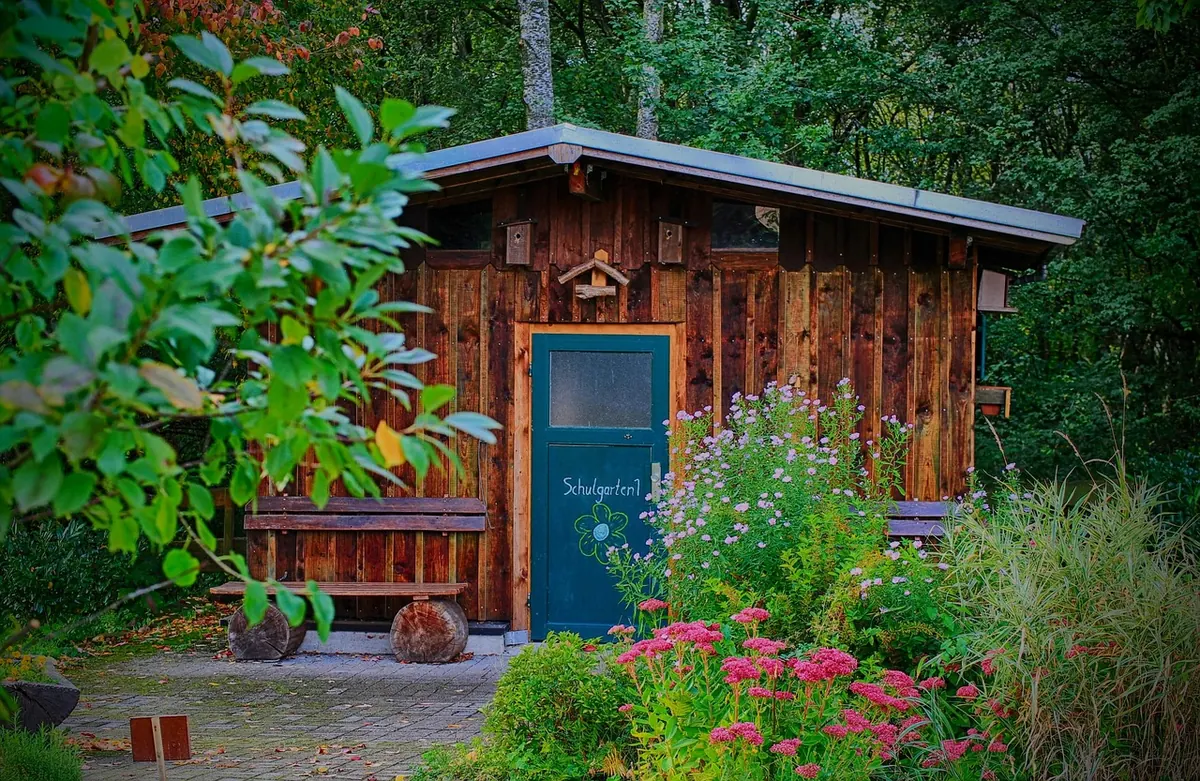
Cumbria is not a difficult place to garden. It is a generous one, provided you stop pretending you live in Kent. Rain arrives sideways, heavy ground can sit wet from October through to April, and a dry week in June is often followed by a fortnight of drizzle. Plant a lavender hedge on clay here and it will sulk, rot and quietly die while you wonder what you did wrong. Work with the climate instead and the same dampness that ruins fussy plants gives you growth that gardeners in drier counties spend all summer watering for.
Read the ground before you order anything
Spend an afternoon looking rather than buying. Dig a hole a spade deep and fill it with water. If it drains away within a few hours, you have reasonable ground. If it is still brimming the next morning, that is your answer, and it shapes every decision afterwards. Squeeze a handful of soil: clay rolls into a shiny sausage, sandy soil falls apart, and anything in between is easier to work with.
Then look at what already grows. Rushes, sedges, marsh buttercup and thick cushions of moss are telling you exactly where water sits. So is the patch of lawn that squelches in February. Note, too, which way the wind comes from. In Cumbria, exposure matters as much as rainfall: a plant battered by driven rain in an open garden will struggle even in perfect soil.
Soil varies enormously across the county. Heavy boulder clay is common in the lowlands, limestone sits around the Morecambe Bay edge, and upland gardens tend towards thin, acidic, leached ground. That last point is worth knowing, because acid soil opens up rhododendrons, pieris, kalmia and blueberries, plants that would otherwise need constant cosseting.
Improve drainage without calling in a digger
Most wet gardens do not need a complete rebuild. They need the growing level raised and the water given somewhere to go. A few principles do most of the work.
- Never dig a hole in clay and fill it with gravel. It becomes a sump that holds water around the roots. Raise the soil level instead.
- Build up rather than dig down. Mounded borders, even 20–30cm higher than the surrounding ground, transform what will grow there.
- Work the top 15cm only. Fork in well-rotted compost and horticultural grit. Grit opens up clay; sand alone does very little.
- Break any compacted pan. New-build gardens and old paths often hide a hard layer just below the spade depth.
- Give water a route out. A shallow swale, a French drain, or a simple channel running to a soakaway or pond at the lowest corner will save a border.
- Stay off wet beds in winter. Keep a plank or two to stand on. Compacted clay takes years to recover.
Mulch every spring with 5–8cm of compost or bark. It feeds the soil, suppresses weeds and, on clay, slowly improves structure. Around silver-leaved and alpine plants, use gravel instead so the collar of the plant stays dry.
Choose plants that earn their place
A cottage garden look comes from abundance, not from rarity. The trick in a wet climate is to pick robust, clump-forming perennials that bulk up quickly and shrug off a soggy winter.
For the wettest ground
Astilbe, ligularia, rodgersia, Filipendula, Trollius, Iris sibirica, persicaria, hardy geraniums such as Geranium palustre, and moisture-loving primulas all thrive where others rot. Add foliage interest with hostas, rodgersia and the bronze-leaved Euphorbia palustris. Tussock grasses are superb here: Deschampsia cespitosa and molinia give movement and structure right through winter.
For raised beds and free-draining pockets
Use the higher ground for plants that need sharper drainage: Salvia nemorosa, nepetia, stachys, thyme, sedum, dianthus and astrantia. Lavender, rosemary and bearded iris will only succeed against a sunny south-facing wall or on a genuinely gravelly bank, so treat them as a bonus rather than a plan.
Structure and shelter
Cottage gardens need bones. Shrub roses, hydrangeas (paniculata types cope well with damp), viburnum, hardy fuchsia and kerria all settle in happily. For shelter from wind, a mixed native hedge of hawthorn, hazel and holly does more for your borders than any amount of staking. In coastal west Cumbria, escallonia and griselinia are useful too.
Lay out the border so it looks effortless
Make beds generous: 1.2–1.5 metres deep at minimum, so you can layer tall, mid-height and low plants without crowding. Sweeping curves suit the cottage style and make mowing easier than tight corners. A gravel or stone path with a soft edge of alchemilla or lady's mantle will blur the boundary within a season.
Repetition is what stops a mixed border looking like a jumble. Choose three or four reliable plants and repeat them down the length of the bed. Plant in odd-numbered drifts of three, five or seven rather than dotting singles about. Allow self-seeders — aquilegia, foxgloves, hardy geraniums, poppies — to fill the gaps for free.
Finally, add verticals. An obelisk with a climbing rose, a clematis through a shrub, a few tall grasses at the back. In a damp climate, plants flop more than you expect, so a loose grid of hazel pea sticks early in the season saves a lot of tidying later.
The jobs that actually keep it low-maintenance
- Spring: cut back last year's stems, mulch, divide any perennial that has lost vigour after three or four years.
- Early summer: stake once, then leave it. One thorough slug patrol after rain is worth several half-hearted ones.
- High summer: deadhead a little for repeat flowers, but do not chase every bloom. Seed heads feed birds and look good in rain.
- Autumn: the best planting window in Cumbria. Leave stems standing for structure and insect shelter.
- Winter: do almost nothing. Stay off the soil and let the garden rest.
Slugs and snails are the price of a damp garden. A wildlife pond, a few log piles and a hedgehog-friendly corner with gaps under fences will bring in frogs, beetles and birds that do the work for you. Encourage these before reaching for anything stronger.
Getting the first season right
Start with the worst-drained corner, not the whole garden. Raise it, mulch it, and plant it with astilbe, grasses and hardy geraniums in early autumn or spring, when the soil is warm and moist but not sodden. Leave the rest of the plot for a year and watch where water lies through a full winter. That one season of observing will teach you more than any plant list.
Then build outwards, repeating what works. A Cumbrian cottage garden is not a battle against the weather; it is a slow, generous partnership with it, and it will reward you with growth that drier counties can only envy.
Photo: KRiemer / Pixabay