Blueberries have a reputation for being awkward, and in most British gardens it is earned. They want soil that holds moisture but drains freely, and a pH somewhere between 4.5 and 5.5 — a combination that rarely turns up on its own. Cumbria comes closer than most of the country. Our rain is soft, many upland soils are already acidic, and few gardens bake dry in July. The difficulty here is the opposite of the usual one: too much water rather than too little, and a cool, damp summer that suits grey mould as well as it suits fruit.
Get the planting right and a blueberry bush will earn its space for years, cropping reliably in a pot on the patio or in a row along a sheltered hedge.
What Blueberries Actually Want
Three things matter more than anything else.
- Acid soil. Aim for pH 4.5 to 5.5. A simple test kit from a garden centre will tell you where you stand. Between 5.5 and 6.5 the plants survive but crop poorly and yellow between the veins. Above 6.5, growing them in open ground is a waste of a season — use a pot or a raised bed filled with ericaceous compost.
- Even moisture, never standing water. Blueberry roots are shallow and fibrous, sitting mostly in the top 30cm, and they have no proper root hairs. That makes them hopeless at finding water in a drought and equally bad at coping with a waterlogged hole. In heavy Cumbrian clay, a plant sitting in a sump will sulk all season and then die of root rot.
- Sun and shelter. Six hours of summer sun gives the sweetest fruit, but a bush in a wind tunnel will lose its crop and its leaves. Shelter matters as much as sunshine here.
Choosing a Spot — and Deciding Between Pot and Bed
If you garden on limestone, or on soil you have limed for years, pots are the sensible answer. A container of 40–50cm diameter takes one bush comfortably; a half barrel takes two. Stand it on pot feet on gravel or paving so water drains away freely, and keep it out of the rain shadow of a wall — pots under eaves stay dry far longer than you think.
In the ground, choose a spot that gets morning sun and drains. Avoid the bottom of the garden and the strip behind a wall where cold air pools, because blueberry flowers open in May and a late Cumbrian frost will blacken them overnight. If your soil is already acidic, you are lucky; if it is neutral, you can still plant by creating a generous pocket of ericaceous compost and composted pine bark, but plant slightly proud of the surrounding soil so the pocket does not become a sump.
Always plant at least two different varieties. Most blueberries crop better with a partner nearby, and bumblebees — the only reliable pollinators, since they can buzz the bell-shaped flowers — will do the rest.
Planting, Step by Step
- Test your soil pH before you buy anything.
- Buy pot-grown or bare-root plants between late autumn and early spring. Varieties bred for cold winters and short seasons do best here.
- Stand the rootball in a bucket of rainwater for twenty minutes while you prepare the planting spot.
- For a container, put a layer of gravel or broken crocks in the base, then fill with ericaceous compost mixed with about a quarter by volume of composted pine bark fines.
- Plant so the top of the rootball sits 2–3cm below the rim, leaving a watering space, and firm gently.
- In the ground, dig a hole wider than it is deep, mix ericaceous compost and pine bark into the backfill, and set the plant so the rootball is level with the soil, mounded slightly if drainage is doubtful.
- Water well with rainwater — not tap water if you can help it — and mulch straight away.
- Space bushes 1.2–1.5m apart in open ground.
- Pick off every flower in the first year, and again in the second if the plant looks small. It feels brutal, but you get a bigger, stronger bush and better crops from year three onwards.
Mulching, Watering and Feeding
Rain-fed gardens have an advantage with blueberries, as long as the water can escape. Top up with 5–8cm of composted pine bark, leafmould or a mix of both each spring, keeping it clear of the stems. As it breaks down it nudges the pH down slowly and keeps the shallow roots cool and damp.
Containers still need checking. A week of warm, breezy weather in June can dry a pot faster than you expect, and rain often misses pots tucked under foliage. Water with rainwater from a butt whenever the top few centimetres feel dry, and never let a pot stand in a saucer of water.
Feed lightly with an ericaceous fertiliser in spring as growth starts, and again after flowering. Overfeeding gives soft, leafy growth, fewer berries and more winter damage. If your pH creeps upwards, elemental sulphur applied in spring at the maker's rate will bring it back down, but it works slowly — do not expect a quick fix.
Pruning, Year by Year
Years one to three
Do very little. Remove dead or broken stems and any weak twiggy growth in the middle of the bush, and leave the rest to build a framework.
Year four onwards
Prune in late winter, February into early March, while the plant is dormant. The best fruit comes on wood one to three years old, so the aim is to keep a steady supply of young stems and let the oldest ones go.
- Cut out one or two of the thickest, darkest canes at ground level each year.
- Remove anything dead, damaged, crossing or trailing on the ground.
- Thin the centre so air moves through — in a wet Cumbrian summer, that airflow is your best defence against grey mould.
- Do not tip healthy young shoots in winter. You would be cutting off the flower buds that carry next summer's crop.
Birds, Vine Weevil and Wet-Weather Problems
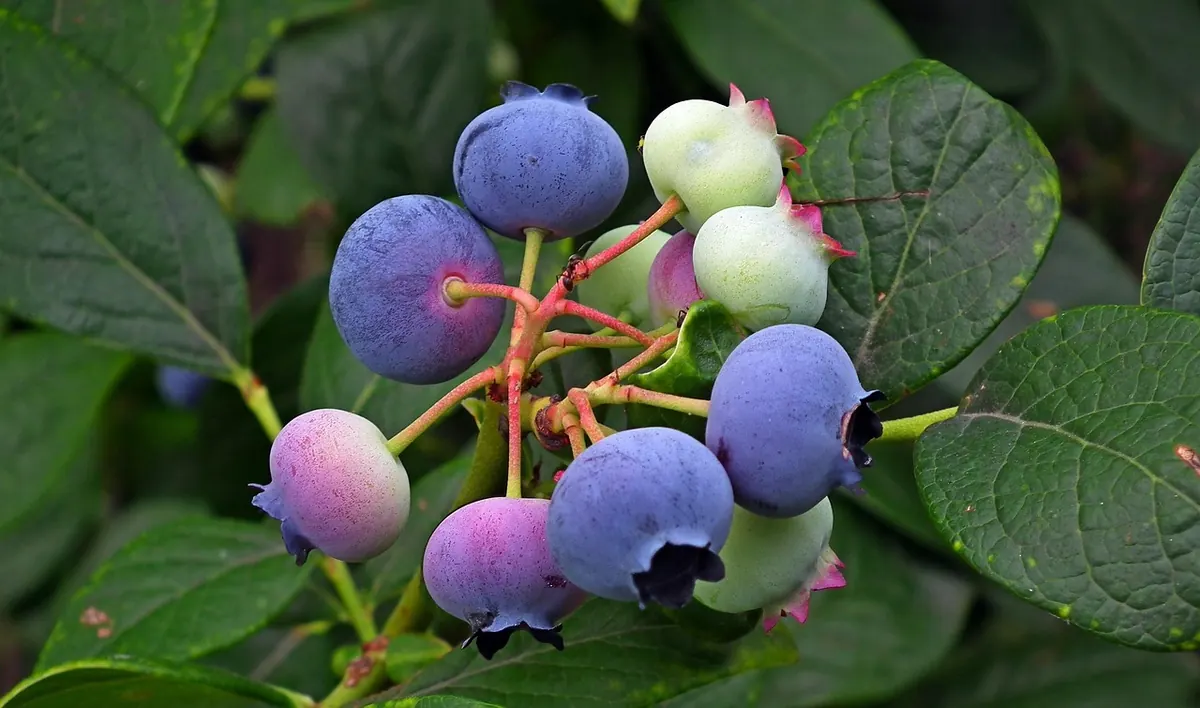
Birds will find your berries the day before you planned to pick them. Net the bushes as soon as the fruit starts to colour, and peg the netting to the ground so blackbirds cannot hop underneath.
In pots, watch for vine weevil: notched edges on the leaves in summer, and fat white grubs curled in the compost later. Biological nematodes watered onto damp compost in late summer work well while the soil is still warm, and are far easier than hunting for grubs by hand.
Damp summers bring grey mould on ripening fruit and spotted wing drosophila, a small fruit fly that lays eggs in softening berries. Both are managed the same way: pick regularly, never leave overripe fruit on the bush or on the ground, and chill what you harvest quickly. Open up the bush when you prune so it dries faster after rain. If a late frost is forecast while the bushes are in flower, throw fleece over them in the evening and take it off the next morning.
The Cumbrian Year, in Short
Spring is for mulching, a light feed and a pH check. Summer is for watering pots, netting fruit and picking every couple of days. Autumn is for nematodes if weevil has been a problem, and for clearing fallen fruit. Winter is for pruning and for ordering a second variety if you started with only one.
Do those small jobs and you will have something most British gardeners cannot manage: a bowl of blueberries from your own ground, picked in the rain, eaten within the hour.
Photo: MrGajowy3 / Pixabay